Catalyx One is an integrated platform that converts municipal waste into baseload electricity and domestic diesel — cutting dependence on imported fuel and stopping plastic before it reaches the ocean. Built on proven, supplier-quoted technology, purpose-designed for Pacific island conditions.
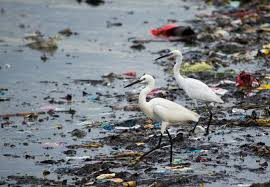
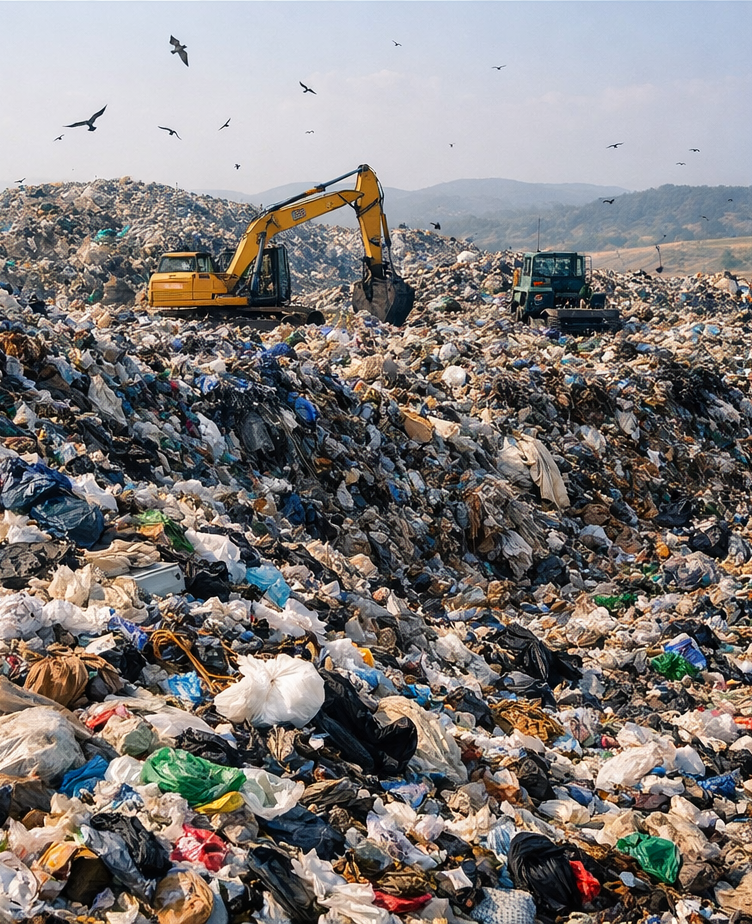
Across the Pacific, waste is mismanaged at scale. Open dump sites overflow, and with few lined facilities, plastic flows through rivers and coastlines into the sea. Meanwhile island grids run on expensive imported diesel — among the costliest electricity anywhere.
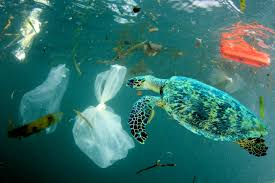
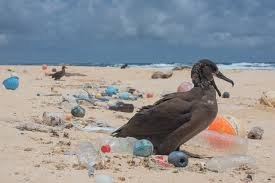
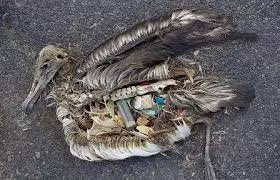
It doesn't disappear. It chokes seabirds, fills the stomachs of turtles and fish, and breaks down into microplastics that move up the food chain — back onto the plate. The Pacific lives from this ocean.


The cheapest place to stop ocean plastic is on land, before it ever floats.
Catalyx One takes mixed municipal waste — delivered unsorted — and turns every fraction into something useful.
Baseload power that directly displaces diesel grid generation — the dominant and most expensive power source across Pacific islands.
Waste plastic converted into high-grade diesel through catalytic conversion — no refining — for transport, logistics and industry.
Paid per kilogram, direct to households, with no sorting required — formalising work that informal waste collectors already do.
Every fraction has a destination — fuel, electricity, recovered metals, aggregate, or safe neutralisation. Nothing is buried.
No source separation required · No experimental technology
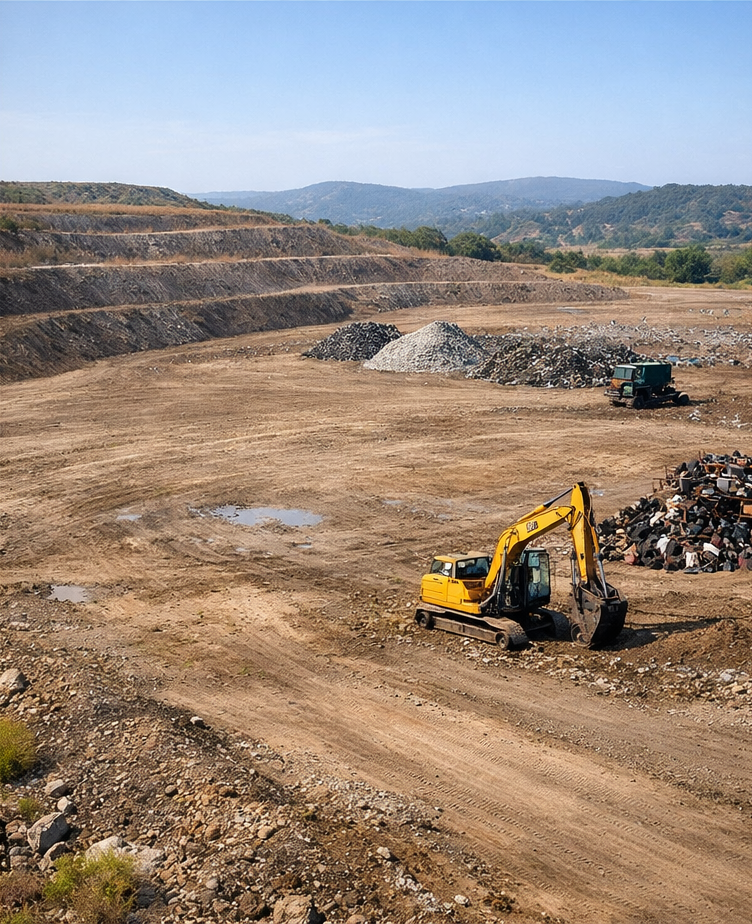
Catalyx One doesn't just process incoming waste — it mines existing dump sites alongside it. Buried plastic, food waste and recoverables feed back through the same platform. Land that has been leaking into rivers and oceans for decades is progressively reclaimed.
Legacy plastic recovered from dump sites adds to diesel output above the base intake.
Buried plastic is captured and converted before it fragments further into soil, groundwater and the sea.
As waste mass is removed, leachate generation and methane release stop at the source — not managed downstream.
Reclaimed sites can be returned to productive community use — a cleaner country, not just cleaner inputs.
Every waste-to-energy plan assumes the waste simply arrives. It doesn't. In the Pacific, collection is the missing link — and the reason plastic keeps reaching the ocean. Catalyx One closes that gap by paying communities, directly, to bring it in.
We pay per kilogram, straight to households, with no sorting required. That single decision turns waste from a burden into an income — and turns thousands of people into a collection network no truck fleet could ever match.
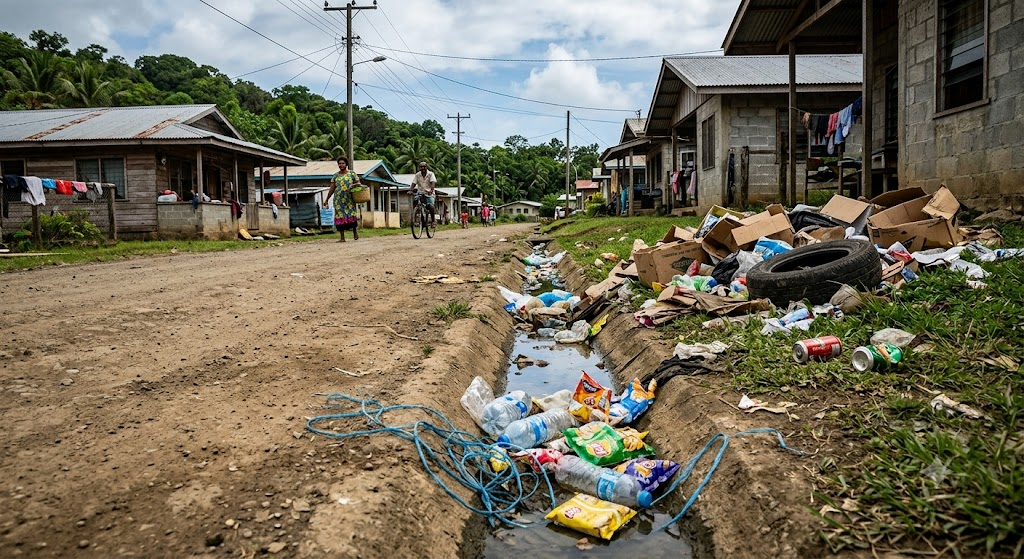
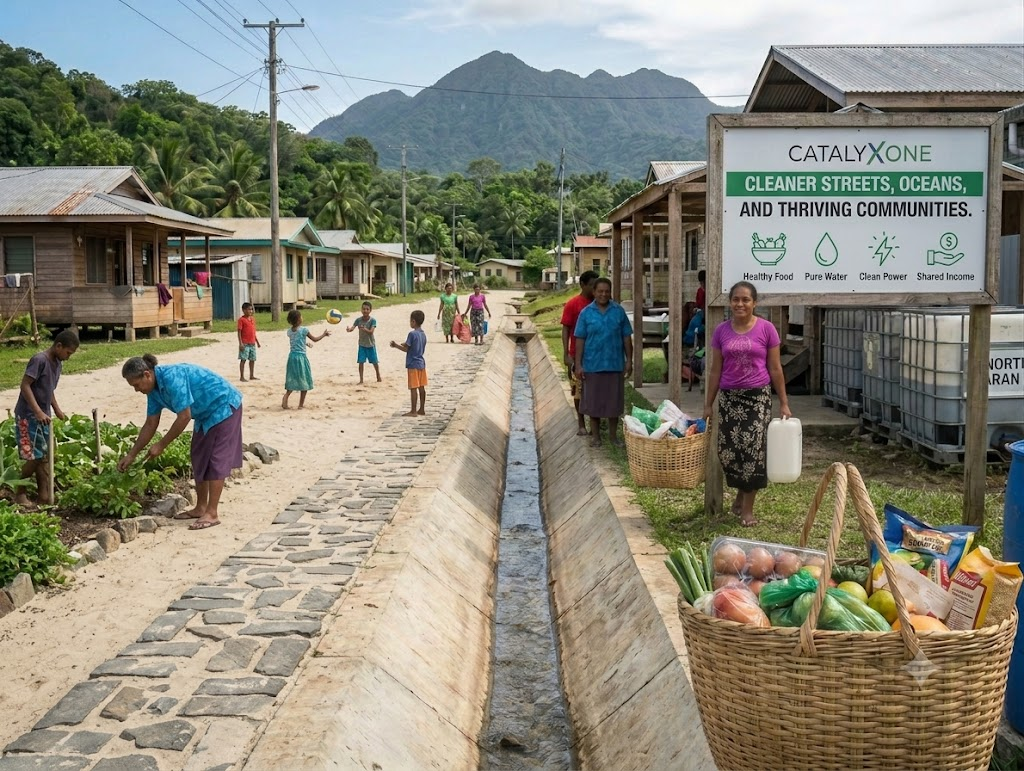
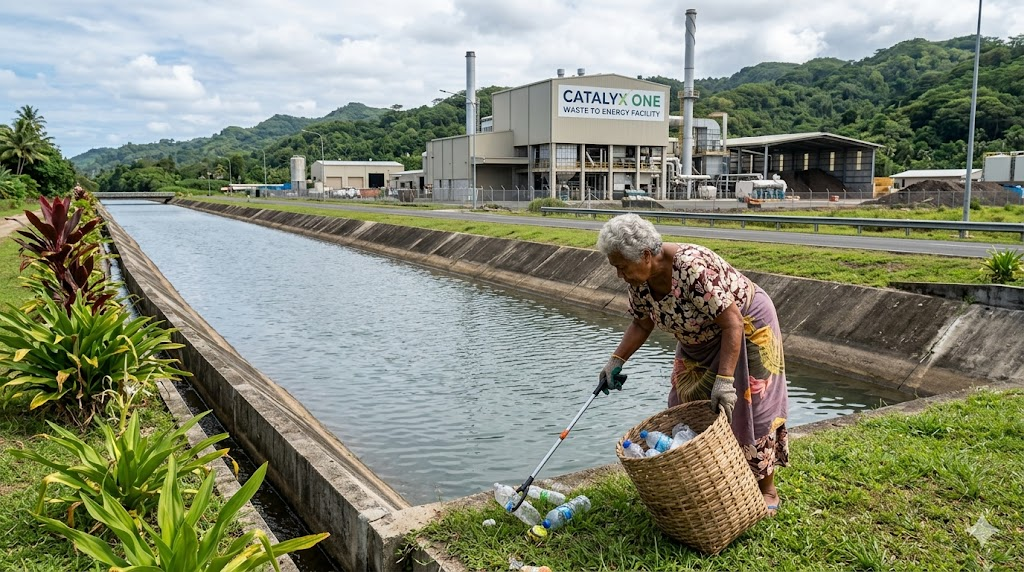
The channel that runs through the village carries plastic straight to the sea. This is where the work begins — households are paid by the kilo for every bag they gather from it.
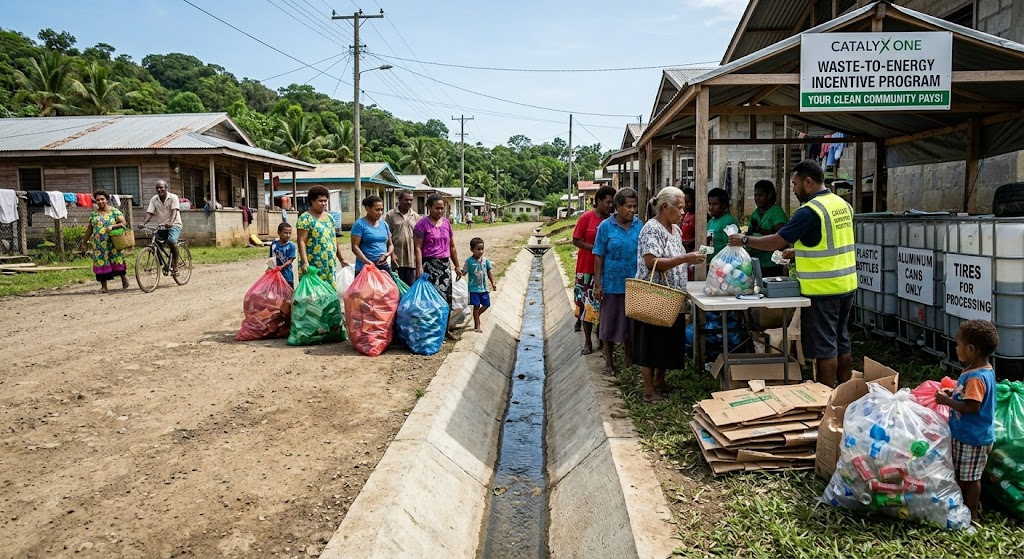
Bag by bag, the community brings what it collects to the local Catalyx One point — paid on the spot, no sorting required — and the channel that carried plastic out to sea runs clear.
Infrastructure becomes prosperity. Clean water returns, income flows steadily, and the facility that powers it all sits quietly alongside homes, schools, and markets — serving the people who made it possible.
Income lands directly with households — a real, recurring reason to gather plastic instead of burning or dumping it.
People bring waste exactly as it is. The platform does the separation. Participation has no barrier to entry.
Informal waste-pickers already do this work, unseen and unsafe. We formalise it — with fair pay, safety and recognition.
Each hub is complete in its own right and separately financed — the same platform, tuned to local waste, energy costs and geography, with collection networks reaching outer islands.
Processing the island's municipal waste into electricity and domestic diesel, with legacy dump-site remediation.
A baseload and fuel hub for the National Capital District, formalising informal waste workers at scale.
Designed electricity-led — plastic is directed to the RDF/electricity stream, because the country's tariff makes power the higher-value output.
Three deployments are the start. The Pacific's plastic and diesel problems span every island grid and every coastline, and meaningful cleanup only works at regional scale. The platform is designed to extend.
Viti Levu hub with outer-island marine logistics.
Port Moresby and broader NCD.
Honiara and provincial centres.
Same diesel-and-waste pressures, smaller scale.
Upolu-concentrated waste and tourism load.
Near-total diesel dependence, Tongatapu hub.
The Pacific contributes less than 1.3% of the world's mismanaged plastic — yet it is among the most affected. Cleaning the ocean meaningfully means doing the work at the regional scale of the problem.
Combined across Fiji, Papua New Guinea and the Solomon Islands.
Catalyx One's contribution is the integrated facility design — not an experimental concept. Every major component is commercially deployed and supplier-quoted.
Every major component is in commercial operation somewhere in the world today. No lab concepts, no first-of-a-kind risk on core technology.
Designed around each nation's actual waste composition and realistic throughput — processing local waste, not imported volumes.
Financed through grant and concessional development finance. Host governments are asked for endorsement and access, not money.
Containerised, modular, and designed for island logistics, climate exposure and remote operation from the ground up.
Catalyx One works with governments, development partners and funders across the Pacific. We're glad to provide a full technical and financial briefing.